

Sustainable Christmas Trees: Why the Norfolk Island Pine Is Your All-Year Solution
The search for a sustainable Christmas tree often ends in compromise: cut trees that end up on the kerb by January, or plastic trees with a carbon footprint that’s hard to justify. The Norfolk Island Pine (Araucaria heterophylla) offers a different route entirely — a living, long-term companion that brings the ritual of Christmas into closer alignment with the values of care and continuity.
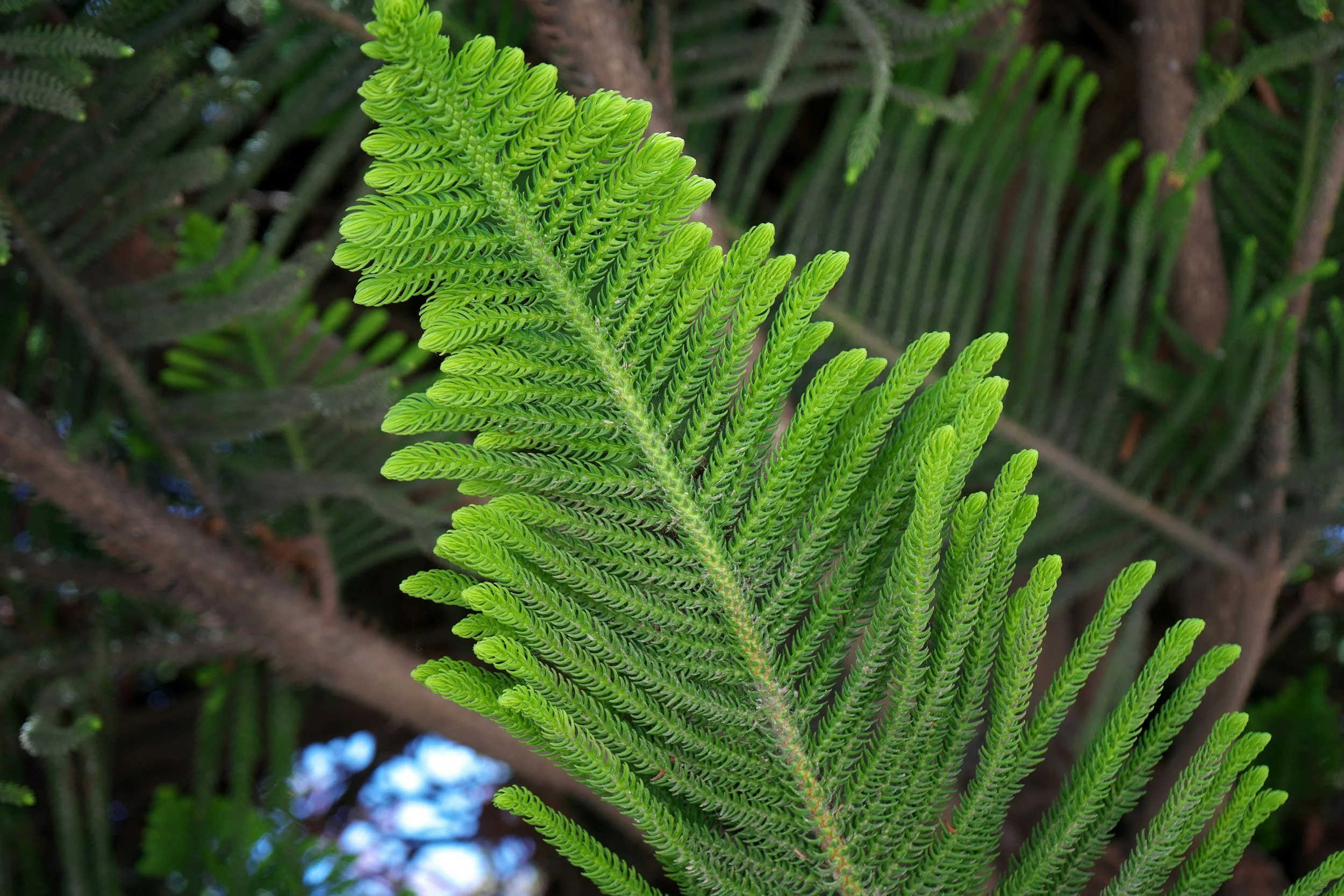
A living alternative to disposable trees
Native to a small island in the South Pacific, the Norfolk Island Pine isn’t a true pine, but a tropical conifer recognised for its graceful, symmetrical tiers and soft, needled branches. Indoors, it grows slowly, usually reaching around four to six feet, and fits comfortably into apartments, cottages and modern homes.
Instead of cutting down a tree each December, you bring one living tree into your space and keep it year after year. It becomes part of your home’s daily rhythm — a reusable Christmas tree that stays with you through seasons, not just the festive weeks.
Caring for a Norfolk Island Pine
Treat your Norfolk as you would any thoughtful houseplant:
Light: Bright, indirect light near a window. If lower branches brown, it may need more natural light.
Temperature: Prefers a stable 18–24°C, away from radiators and cold drafts. Sudden changes can cause stress and needle drop.
Water: Water when the top few centimetres of soil are dry, letting excess drain away. Avoid waterlogged roots and add light misting for extra humidity.
Feeding: Use a diluted houseplant fertiliser in spring and summer, then allow it to rest in winter.
With consistent care, a Norfolk Island Pine can live for decades, becoming a perennial Christmas tree that grows a little taller and fuller each year.
Decorating your Norfolk Island Pine
When December arrives, decorate with restraint. The branches are softer than those of traditional firs, so choose lightweight ornaments and low-heat LED lights. Natural materials such as paper, glass, wood and felt work beautifully with its soft, architectural shape and reinforce the low-impact ethos.
You can invest in a small collection of timeless decorations you return to annually, or make your own: folded paper stars, clay shapes, or simple garlands. Over time, the tree and its ornaments become a shared archive of winters past.
A quieter, more sustainable tradition
Choosing a Norfolk Island Pine as a Christmas tree is a subtle shift with real impact. Instead of a cycle of buying, discarding and replacing, you commit to a single, living tree — one you water in January, dust in March, and move closer to the window in June.
By the time the next festive season arrives, it’s still there: familiar yet changed, a little taller, a little stronger. In a culture of overconsumption and disposable decor, that continuity feels like a quiet, hopeful statement.
A Christmas tree that lasts — and lasts beautifully.